




Risk Reduction Solutions for
Pharmaceutical, Life Sciences & Healthcare
Bioquell Qube for Healthcare
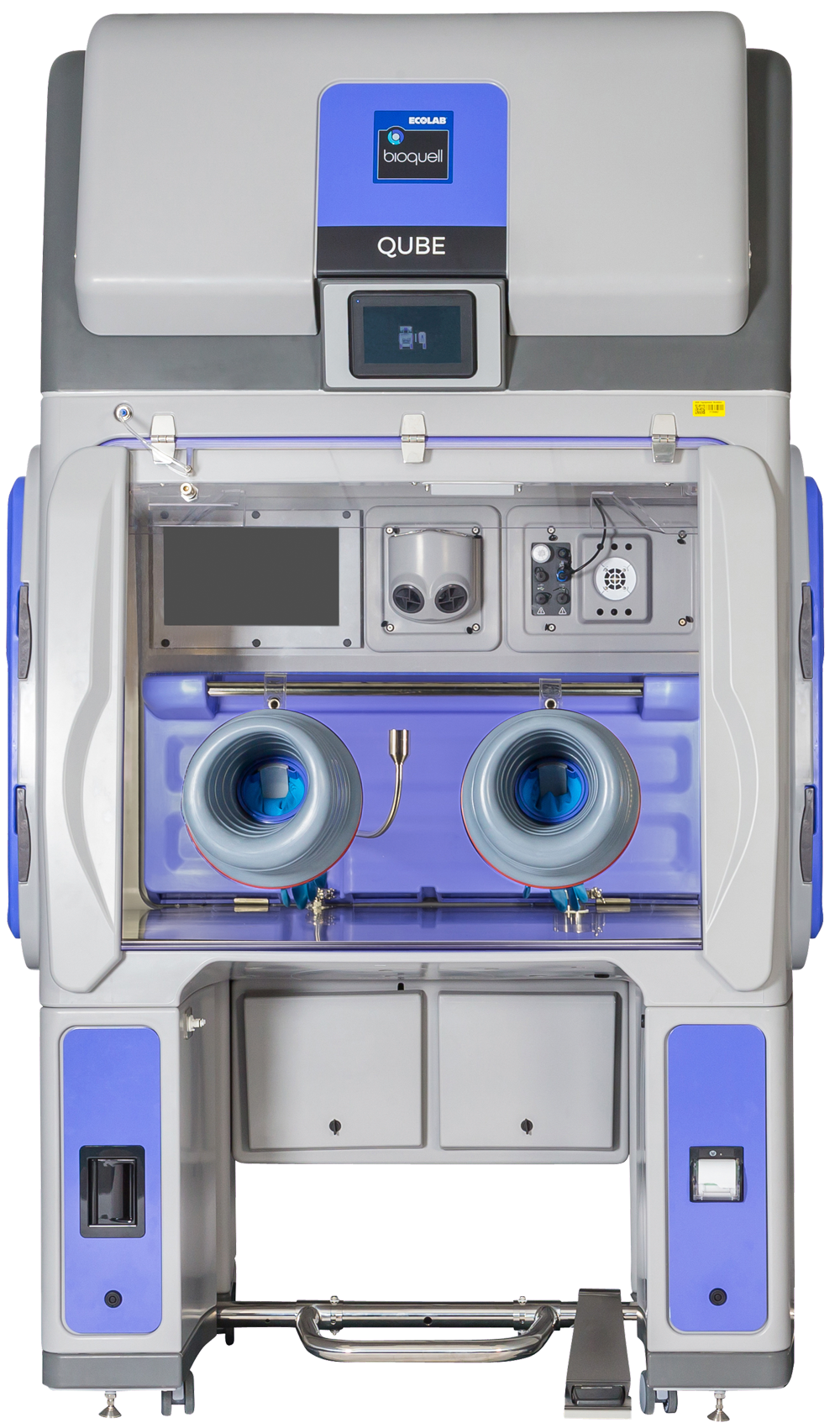
You can create a secure aseptic processing workspace to prepare individual patient prescriptions while meeting the latest regulations, and protecting your patients and staff with the Bioquell Qube. This configurable isolator comes integrated with Bioquell’s Hydrogen Peroxide Vapour technology.
Ideal for:
- Compounding sterile and non-sterile drugs
- Hazardous Drug (HD) compounding
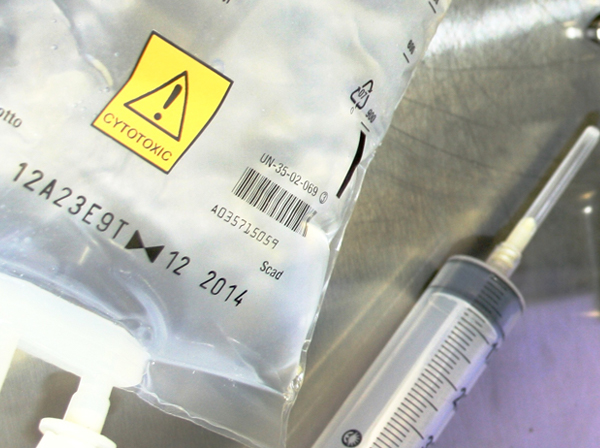
- Cytotoxic drug preparation

Rapid
Decontamination cycles in as little as 20 minutes for rapid so you can increase prescription throughput

Adaptable
Work in negative or positive pressure; Modular workspace to meet your needs from two to six gloves

Assured
Creates an ISO 5/EU Grade A cleanroom environment in your pharmacy while residing in a lower grade space

Accepted
Meets or exceeds global regulatory compliance standards including USP 797 and USP 800

Integrated
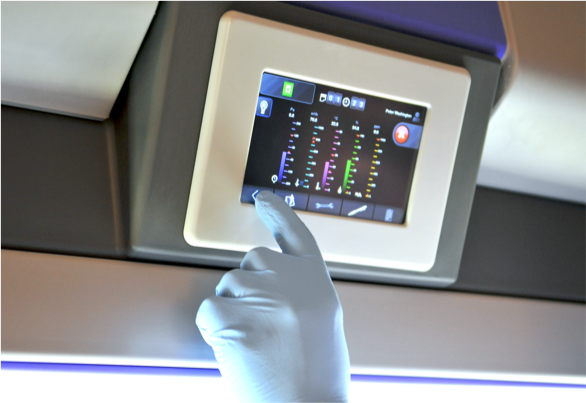
Built-in Bioquell Hydrogen Peroxide Vapor technology for reliable, repeatable decontamination results; easy-to-use touch-screen controls

Productive
Installed with no construction needed; requires a single outlet for power; no ductwork required; ready for use as soon as 12 weeks from order date

Patient and Staff Safety
A drug’s impact can be negated by poor conditions while preparing and packaging. Even staff, such as nurses administering medicine, can be exposed to Hazardous Drugs (HDs) due to inferior equipment. Bioquell’s solutions allow you to ensure every exposed surface throughout your hospital pharmacy has received a validated decontamination, from the interior of a workstation through to the cleanroom and anteroom.

Cost Savings
Outsourcing operations for compounding often means less control over quality and higher costs than performing these tasks internally, especially as your needs increase in quantity or turnaround time. Bioquell offers solutions to facilities opting to take charge of the compounding to maintain the drug’s integrity as well as keeping your patients and staff safe.
Compliance
Whether you are working with Hazardous Drugs (HDs) or non-sterile compounding, you need to comply with the standards set forth such as USP 797 and USP 800. Bioquell offers unmatched solutions from compounding aseptic containment isolators (CACIs) to decontaminating your entire room to maintain acceptable particle counts.
Compounding
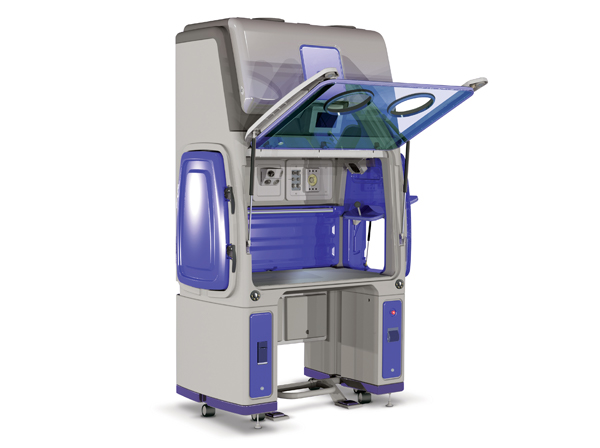
Bioquell offers a modular and unique containment system with built-in hydrogen peroxide vapor decontamination that can be used for non-sterile and sterile compounding, and can be vented for Hazardous Drugs (HDs) preparation utilizing negative pressure. Nearly any compounding operation can be performed comfortably and safely with the Bioquell Qube.
Modular and Expandable Configurations
The Bioquell Qube offers multiple configuration options ranging from one to three chambers with up to two optional exterior/material transfers. Add chambers or material transfers as your needs change.
ACCESSORIES
Environmental Monitoring
Fully integrated, pre-engineered options for total particulate and viable monitoring systems to help meet regulatory reporting requirements
Fully integrated, pre-engineered options for total particulate and viable monitoring systems to help meet regulatory reporting requirements
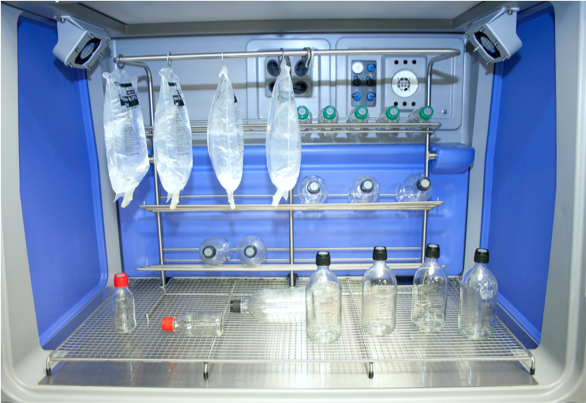
Options for optimizing each chamber: full-size option for maximum storage of vials, delivery devices, reagents and other materials during decontamination cycles
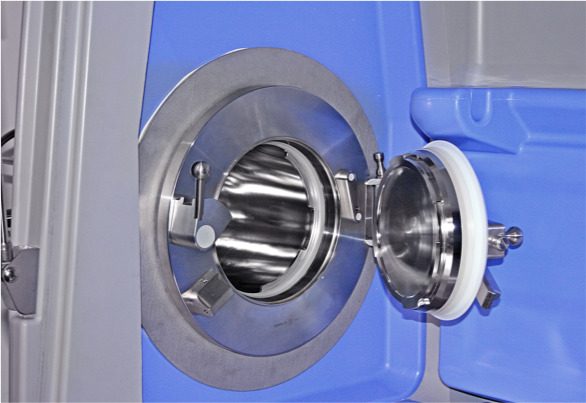
Aseptic transfer of materials into and out of isolators with no break of containment or effect on ambient characteristics – available in both 190mm and 270mm
Contact us for more information about accessories in the Bioquell qube to help optimize your workflow.
Contact UsInstallation, Validation and Compliance
Our technical experts can install and validate the Bioquell Qube in as quickly as two weeks in most instances. Because the Bioquell Qube is easy to maneuver and fast to assemble, you often do not need any construction or electrical alterations to install. It can fit through 800mm (32-inch) door frames to be built directly in the designated area, and it requires only a standard electrical outlet to function.
Validation includes training, installation, operational and performance qualification (IQ, OQ and PQ), validated cycles based on custom-load configurations, and all appropriate documentation.
Preparation of sterile drugs and Hazardous Drug compounding continue to experience increased regulatory control around the world. The Bioquell Qube provides assurance that requirement are being met. Protect your staff, your patients, your prescriptions and your facility by using the Bioquell Qube and Hydrogen Peroxide Vapor technology.
FAQs
Will this offer 21-CFR Part 11 compliance?
Yes, we are able to offer an audit trail software package to support compliance with 21 CFR Part 11.
What is the internal floor of the Bioquell Qube made from?
The floor of the Bioquell Qube is constructed from 316 stainless steel to ensure resistance to scratching on the working surface.
If my processes or needs evolve, is it possible to modify the Bioquell Qube accordingly?
The Bioquell Qube has been designed to allow for certain upgrades to be easily added after installation, such as adding a glove tester, particle counter, active air sampling device, racking or material transfer device. These options can be budget-friendly and can enhance your system’s capabilities. If you have specific future needs in mind, let’s discuss them today to ensure we design a solution that meets your current and future requirements effectively.
How can I bring tubing or cables into the Bioquell Qube?
We have an option for fitting a floor-mounted one-inch triclover port in each chamber. This allows you to bring in liquid lines or cables securely into the body of the Bioquell Qube.
What sets the Bioquell Qube apart from traditional stainless steel options?
The Bioquell Qube is constructed of tough and hard-wearing polypropylene, which is resistant to most materials the unit is ever likely to come into contact with. Because of its construction, the Bioquell Qube can be installed and validated within 16 weeks and, in most cases with minimal invasiveness to your operation or workflow.
Can you set alarms for the temperature inside the Bioquell Qube?
Yes.
If I wish to change pressure from positive to negative, do I need to change the filters or take any additional action to ensure it is safe to use?
The Bioquell Qube can be switched between pressure regimes simply with the touch screen; no additional changes are needed.
Are there different leak tests programmed for the Bioquell Qube?
Yes, there are leak tests programmed for both positive and negative pressure.
Contact Us
To learn more about how Bioquell can fit your solution, please contact us.
The Americas
Ecolab Inc
702 Electronic Dr. Suite 200
Horsham, PA 19044
+1 215 682 0225
bioquellusorders@ecolab.com